General · FORTUNE
Fortune #33
Mixed — reflect carefully
The advice you receive contains both useful parts and parts that do not fit you. Listen respectfully, then choose according to your own goals and situation. You do not need to use every suggestion at once.

QUOTE CARD
A quote for you
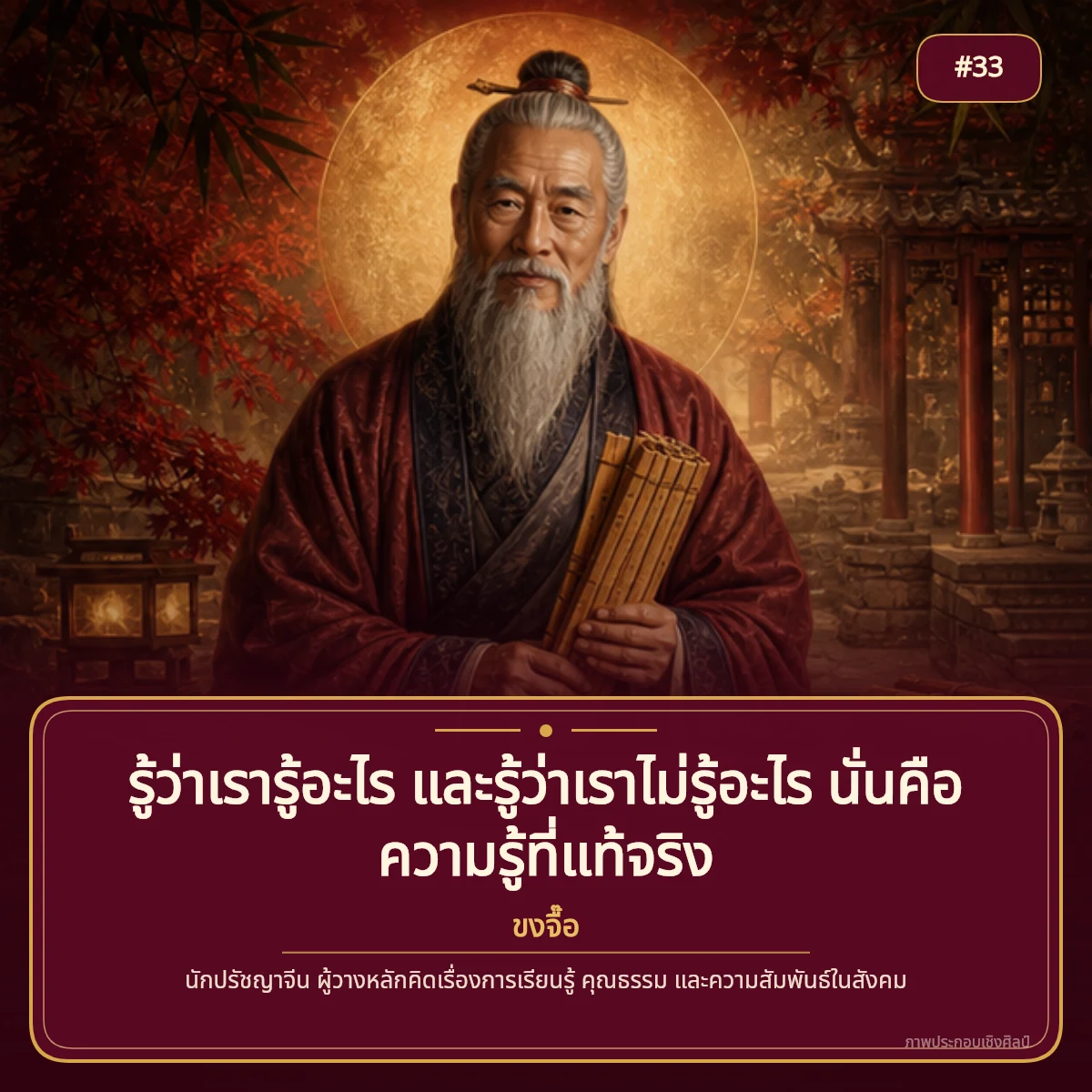
“รู้ว่าเรารู้อะไร และรู้ว่าเราไม่รู้อะไร นั่นคือความรู้ที่แท้จริง”
— ขงจื๊อ
นักปรัชญาจีน ผู้วางหลักคิดเรื่องการเรียนรู้ คุณธรรม และความสัมพันธ์ในสังคม
- Person
- Confucius — Analects 2:17
STORY & REFLECTION
Warren Buffett gives weight to what he does not know
Warren Buffett · Circle of competence
In his 1996 letter, Buffett explained that an investor need not understand every company. It matters more to evaluate businesses one can understand and to know the boundary of that circle of competence. The circle's size matters less than honesty about its edge, because damage often begins when we believe we understand what we cannot actually explain.
This approach allows Berkshire to let many opportunities pass without proving itself correct every time. Admitting uncertainty does not stop learning; it separates learning from risking money before understanding. Buffett reads, waits, and selects businesses whose long-term economics he can evaluate rather than buying because other people sound certain.
Advice works similarly. An articulate person may have deep experience in one context but know little about your limits. Someone who loves you may mean well while answering from their own fear. Respectful listening does not oblige you to follow everything. You must consider whether the advice lies within the giver's real experience and fits your goal.
Divide a page into evidence I know and things I do not yet know. Notice which side is carrying the important decision. If uncertainty remains large, find someone with direct experience or run a small test. “I don't know yet” does not close the road. It identifies where a light must be turned on before you walk.
Reflection
Good advice still needs your own judgment.
A small action today
List what you know and do not know in two columns.
A question to reflect on
Where could admitting you do not know open learning?